Thursday, 21 March 2013

The Open University is special.

Firstly, Let me not hesitate to say that this post is written with an enormous amount of bias, I am an Open University graduate and extremely proud to be one. Equally however, I am proud of having learnt from an institution that now feels uniquely placed to respond to teaching in the modern world.

The OU gained its Royal charter in 1969, and probably seemed a vague and strange idea when it was mooted as a 'university of the air' by the then Labour government that wanted it to reflect their commitment to the idea of the 'white heat' of technology and science (what is it about  the 60's by the way, Star Trek, Dr Who, walking on the moon, tech based universities - they all happened in this astoundingly optimistic decade!?). To many traditionalists and elitists it was anathema allowing many less educated plebeians access to higher education. even now the OU, perhaps uniquely, has very loose entry standards. They believe if you truly want to do it and can commit to it, you can achieve it - and they will enable you to do so. this is a good thing by any definition. Talk about aspiration nation - this is aspiration with support.

http://www.open.edu/openlearn/

I will be the first to admit that for some years the OU had an image problem. Mostly because its programmes were buried away at 1 am on BBC 2 and fronted by bearded kipper tie wearing educators who's programmes were seeing the light of day many years after their justifiable life-cycle. they were watched only by students, drunks staggering in  and finding this was the only channel still playing and insomniacs!

The other problem was perception. You could lose track of how many people used to say something akin to 'oh, the OU hey, they spoon feed you a lot of the stuff though don't they?' Well no actually! You work very hard whilst fitting your work around your life, partener, job but are still expected to produce work to the standard of full time students. In many ways it teaches you discipline and organisational skills on top of what you are learning in the first place.

Now however, the OU is coming into its own. As an institution built on technology, the 'internet age' suits it perfectly. Access to materials via the internet, CD Roms, online forums, social media groups and more have all been assiduously leapt upon and used by the OU and there has to be mention for its fabulous online library with an incredible array of connections and subscriptions.

As many institutions consider MOOCS as a potential threat or new way to go the OU can merely integrate the idea into its broad tech base.

Thinking back to the teaching standards I experienced it is small wonder to me that the OU had 17 out of 24 subjects assessed as excellent by the Quality Assurance Agency or that it is always highly ranked in student satisfaction surveys. You cannot find it in most University ranking tables because its courses are part time and  by distance learning but as many more venerable institutions venture into distance learning they can (and often do in partnership) do worse than to take a leaf from the OU's experiences.

As numbers of full time students are dropping and full time course fees are high, I for one hope that students don't overlook the OU as an option. It is a brilliant institution that as a nation we should be proud of for its eglaitarianism and success.



Monday, 18 March 2013

Let's celebrate engineers

Recently came across the Queen Elizabeth Prize for engineering in the news http://www.qeprize.org/
and I'm a big fan.

we need to celebrate our engineers and support the next generation(s) coming through. Our economy depends on them and many of our great discoveries are thanks to them. Often the scientists get the glory, but would they have found the Higgs-Boson at CERN without the engineers to build it? Would man have walked on the moon without the engineers to build the craft to get there? Would the Mars Rover be sending messages back? Would I be able to write this blog or someone else read it? of course not!

Engineers create the very building blocks of useful tech around us and we often take that for granted. Which is a shame when you consider how much we celebrate some so called 'celebrities' that contribute far less of meaning to our world.

let's not forget too that Britain has a proud engineering heritage, we have created amazing things like the London Underground, The London sewer system, the first locomotives, ThrusstSCC the fastest car in the world, the oldest windmill in the world and so much more.

So this prize is a great thing - recognition at last for those that don't always get recognised for making the world around them do just that - 'work'.


Tuesday, 12 March 2013

Online profiles an advertisesrs dream?

apparently liking curly fries on Facebook correlates to high intellect! Doubtless leading chip manufacturers will be rapidly putting together deals with Mensa for puzzles on the sides of their packs as a selling point now! I admit that is ridiculous and perhaps a tad facetious but it illustrates the point.

People like to share their opinions and tastes. We, as humans, are socially interactive apes after all. the Internet allows us to do that in much wider spectrum now. Ones own twitter feed is peppered with links to things found fascinating and that one hopes may interest others too.

Yet how often do we stop to think about our digital footprint? The social media version of us that is forever growing on the Internet through our social media accounts, blogs and trails on websites?

The collation of the information from these sites can create an unnervingly accurate picture, often from seemingly innocuous responses, as this study shows,

http://www.bbc.co.uk/news/technology-21699305

For advertises this must be nirvana. We can be targeted and have our ads personally tailored, At times this is wonderful. If a new book were to be pointed out to me in a subject area that I'm interested in and may otherwise have missed then that is a good thing. The question is how targeted do we want to be and how obtrusive might such advertising become in the future.

We hold the keys with our online behaviours. The one thing I would also say is that when people panic about these things whatever an advertiser throws in your direction. you don't have to buy it. There are plenty of things out there we might want but do we actually need them and can we afford them. Those are questions we need to ask ourselves. It's not the advertisers responsibility - its ours to differentiate between want and need.

As any good economist would tell you.


Friday, 8 March 2013

The incredible inclusivity of the internet

On reviewing the state of this blog one came across a wonderful tool that show yo where your traffic/viewership is coming from. As expected, most visitations were from the UK. This makes sense for a regional, far from seminal, often overly verbose, meandering piece of mind fluff.

What was surprising however was that visits had also occurred from people around the globe in such far flung places as Peru, USA, Canada, Japan, China Germany, Australia and more.

who would have thought that such inane ramblings would or could be so widespread. Geographically widespread that is, not numerically as there have only been 1 page visit ever from Japan and Peru. It does beg the question however - just what did they think they were going to find here and what did they think of it when they got here?

We'll never know - and perhaps that's for the best.


Thursday, 7 March 2013

World book day

Today is world book day! Which is great day/celebration to have. Probably much more potentially inspiring and rewarding than say world pickled herring day or some such equivalent. Discovering that it is world book day also helps explain why, on the way to work, one saw several children drifting towards the local primary school looking like escapees from Hogwarts.

Some people have taken time to deride this aspect of world book day, bemoaning its focus on dressing up over literature.

http://www.bbc.co.uk/news/magazine-21687507

They may have a point. Then again interactivity is one of the most engaging ways to involve people wit a subject or idea. Which is why so many museums now embrace interactive approaches.

Books themselves have to compete in an ever expanding media market for children's attention. Let's not deride the idea of engagement and celebration. Instead let's just enjoy the creativity of the dressing up & watch a residual effect of an ever growing legion of bibliophiles.

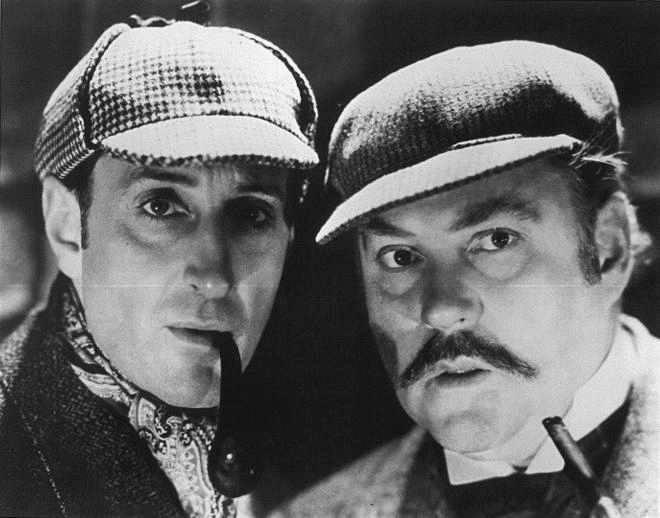
After all it seems elementary old fellow.

Tuesday, 5 March 2013

History: art or science?

I love a good murder mystery and a historical whodunit as much as anybody else. It transpires that what I truly love however is unbiased, critically appraised deep historical research. It's an interpretation of presentable/provable facts I'm looking for, not supposition based on circumstantial evidence.

We can all maintain our personal theories on why things happened or if indeed they did happen at all. The key factor for any historian worth their salt though is to be able back those assertions with discernibly unbiased and acceptable evidence.

Take this recent example;

http://www.newstatesman.com/culture/2013/03/new-evidence-was-richard-iii-guilty-murdering-princes-tower

An interesting article and an interesting theory. Based however on a lot of circumstantial evidence and supposition. Amy Licence may well be right, I for one don't know either way if Richard was involved in the death of his nephews. For that mater I don't know for a fact that they were killed. Its never been proven either way. Which is where supposition comes in.

I enjoy strongly opinionated historians who will fight their cause. Just as long as they can use evidence to justifiably support that cause. Otherwise what we have is an artwork of woven together ideas and suppositions underpinned by history akin to hearsay. This just won't do! We came through the Enlightenment for a reason; let's take a rational reasoned approach to everything that's appropriate to do so (history certainly is) and be absolutely certain of our facts.  Like scientists sometimes we'll have to say 'we just don't know'. Perhaps it will be less exciting and sell less books but it'll be intellectually more honest and benefit the discipline of history more in the long run.

So history art or science? The best history has a scientific unbiased approach to the research and then presents that in an artistic and engaging way.

Monday, 4 March 2013

Eating the seasons

One is forcibly struck by the fact that one does NOT particularly know what fruit or vegetables are in season at the moment. A sense of chagrin is only enhanced by having grown up in the Lincolnshire countryside since the age of 11 (which somewhat negates the argument of being a city born boy).
Aside from knowing that peas & strawberries are summer fruits one has been left with little other working knowledge. Which seems a shame if not even shameful.

Our connection with the land and the changing seasons is continually swamped. Entombed as it is beneath the ever foaming tide of availability and forced grown foods the supermarkets offer all year round. One could argue however that this is disconnecting us from the natural state of things, as well as leaving us with bland rather than seasonably wondrous taste sensations.

No matter, there are tools online to help with this sort of thing;

http://eatseasonably.co.uk/what-to-eat-now/calendar/

Oh noble internet thou art a wondrous tool for such things! Now let's see if we an be inspired to eat a little more seasonally. (difficult when constant temptations sail before us but still....)

Friday, 1 March 2013

NOT trusting the workforce

So it would appear that Yahoo's chief exec really DOES NOT trust her workforce. Marissa Meyer, the CEO in question has informed workers who are employed remotely that they must relocate into the company buildings.

http://allthingsd.com/20130222/physically-together-heres-the-internal-yahoo-no-work-from-home-memo-which-extends-beyond-remote-workers/

This seems to be a reflection on the companies paranoia that they are not necessarily getting the productivity they should from home workers. This seems more than faintly ridiculous on a number of levels.

 First and foremost Yahoo are a tech based company, for them to oppose tech base remote working seems counter-intuitive and certanily won't help their brand reputation amongst the nerd elite.


Even setting this aside however, it is also seemingly wrong to judge your workforce in this manner. They are far from but automatons working as they do in a creative field and output cannot necessarily be measured from what an overseer can perceive from their desk aboard the good ship tradionalia.

Furthermore productivity and achievement are not mutually exclusive. Some can achieve what you want/obtain theirs and your company goals even IF they happen to go to the fridge a couple of times or wander off and do something else. you are paying them for their output/contribution/ability as much as their time these days.

Oh yeas and finally, - if you invest trust in your workers you are often rewarded. Some people with a reasonable amount of experience in the cutthroat world of capitalism even think so themselves.

http://www.virgin.com/richard-branson/blog/give-people-the-freedom-of-where-to-work